
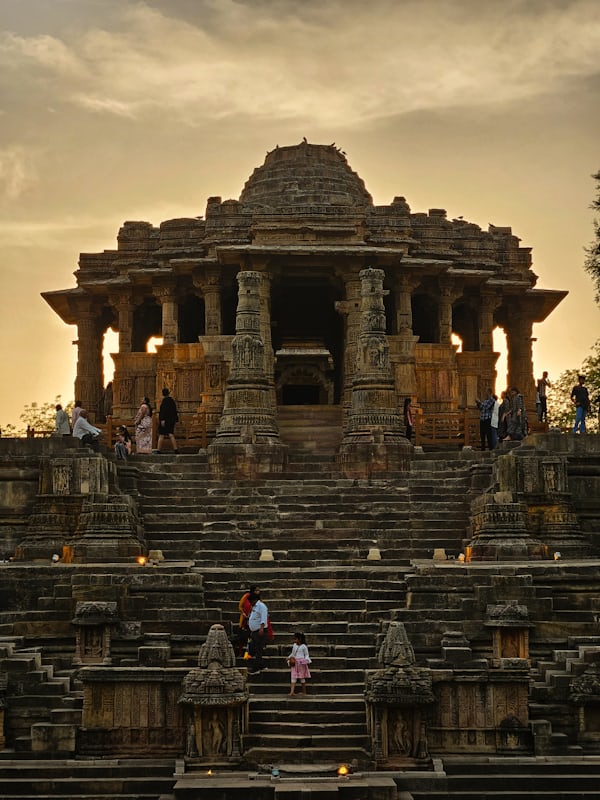
The Konark Sun Temple is one of India’s most remarkable ancient monuments, known for its grand design, deep symbolism, and historical importance. Located in Odisha, this 13th-century Sun Temple stands as a testimony to India’s advanced knowledge of architecture, astronomy, and art. Built in the form of a massive stone chariot dedicated to Lord Surya, the temple reflects precision engineering that continues to amaze historians and visitors alike.
Over the years, Konark has also gained attention for its unanswered questions and legends, often referred to as the mysteries of the Sun Temple. This guide explores the history, structure, location, and facts behind Konark, separating proven evidence from popular beliefs.
Where Is Konark Sun Temple Located?
The Konark Sun Temple is located in the town of Konark, in the Puri district of Odisha, on the eastern coast of India. The temple lies close to the Bay of Bengal, which played a significant role in its historical importance as a landmark for ancient maritime trade.
Konark is situated about 35 kilometres from Puri and approximately 65 kilometres from Bhubaneswar, the capital city of Odisha. Due to this location, the Sun Temple is often included in the popular Bhubaneswar–Puri–Konark tourist circuit. The surrounding region is mostly flat coastal land, making road travel smooth and convenient.
Historically, Konark’s coastal positioning is one reason the temple came to be known as the Black Pagoda by European sailors, who used it as a navigation reference while sailing along the eastern coastline. Though the shoreline has shifted over centuries, the temple remains one of the most prominent heritage landmarks in eastern India.
Today, Konark is well connected by road and easily accessible for pilgrims, history enthusiasts, and travellers visiting Odisha.
Related: Indore to Omkareshwar Distance, Route, Time & Travel Guide
Konark Sun Temple History: Who Built It and Why
The Konark Sun Temple was built in the 13th century during the reign of King Narasimhadeva I of the Eastern Ganga Dynasty. Historical records and inscriptions confirm that the construction took place around 1250 CE, when the Ganga rulers were at the peak of their power in eastern India.
The temple was dedicated to Lord Surya, the Sun God, who was widely worshipped in coastal Odisha during that period. Sun worship was closely linked to prosperity, maritime success, and royal authority. By building a monumental Sun Temple near the coast, the king aimed to showcase religious devotion as well as political strength.
According to historical texts such as those written by Abul Fazl, the temple’s construction involved thousands of artisans and took several years to complete. The chief architect is believed to be Bisu Maharana, whose family lineage was known for temple architecture in the region. The structure was built using stone and laterite, without the use of mortar, reflecting advanced engineering knowledge.
Beyond religious reasons, the Konark Sun Temple also symbolised the Eastern Ganga Dynasty’s dominance over trade routes and coastal territories, making it both a spiritual and strategic monument.
Related: Shaniwar Wada Pune – History, Haunting & Complete Visitor Guide
Architecture of Konark Sun Temple (Chariot of the Sun God)
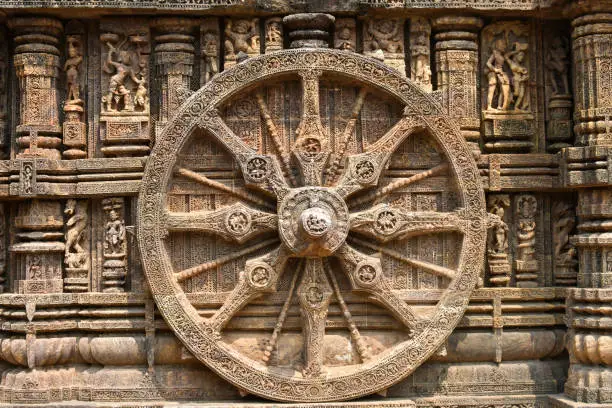
The Konark Sun Temple is one of the finest examples of temple architecture in India and is designed as a giant stone chariot of the Sun God, Lord Surya. The entire structure symbolises Surya riding across the sky, reflecting the deep connection between architecture, astronomy, and spirituality in ancient India.
The temple chariot is supported by 12 massive stone wheels, six on each side. Each wheel is about 10 feet in diameter and is carved with intricate spokes. These wheels are not just decorative; they function as sundials, allowing time to be read accurately using the position of the sun’s shadow. This highlights the advanced scientific understanding of the temple builders.
At the front of the chariot are seven powerful stone horses, representing the seven days of the week. The horses appear in dynamic motion, giving the structure a sense of energy and movement. The entire temple faces east, so the first rays of the rising sun would illuminate the main sanctum, a feature that reflects precise astronomical planning.
The walls of the temple are covered with detailed carvings depicting daily life, dancers, musicians, animals, celestial beings, and mythological scenes. These sculptures are not random decorations but a visual record of 13th-century Odisha’s social, cultural, and religious life.
Together, the scale, precision, and symbolism of the Konark Sun Temple architecture make it a masterpiece that continues to amaze historians, architects, and visitors alike.
Related: What Every Indian Should Know About Their Local MG Road
Inside Konark Sun Temple: Sculptures, Carvings, and Hidden Meanings
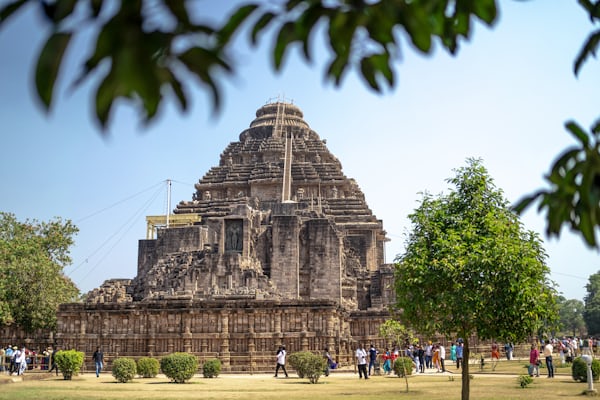
Stepping inside the Konark Sun Temple is like walking into a stone gallery that tells stories of life, belief, and time. Although the main sanctum no longer stands, the surviving halls and walls reveal some of the most detailed stone carvings found in any Indian temple.
The inner walls are filled with sculptures of dancers, musicians, priests, and royal processions, reflecting the cultural richness of 13th-century Odisha. These carvings show how closely art and religion were connected to everyday life. The temple was once a centre for ritual performances, and the dance poses carved in stone match classical Odissi dance movements still performed today.
One striking feature inside the temple is the presence of erotic sculptures, carved with balance and restraint. These figures are often misunderstood, but scholars believe they represent human desire as part of the larger cycle of life and spirituality. Rather than being vulgar, they reflect the ancient belief that worldly life and spiritual pursuit coexist.
You will also notice carvings of animals like elephants, lions, and horses. These symbolise power, protection, and energy. Floral patterns, celestial beings, and scenes from mythology appear alongside daily activities such as farming and trade, showing a complete picture of society at that time.
Every sculpture inside Konark has meaning, making the temple not just a place of worship but a stone record of history, philosophy, and human expression.
Related: 12 Instagram-Worthy Spots Around Charminar District
Konark Sun Temple Mysteries Explained (Facts vs Myths)
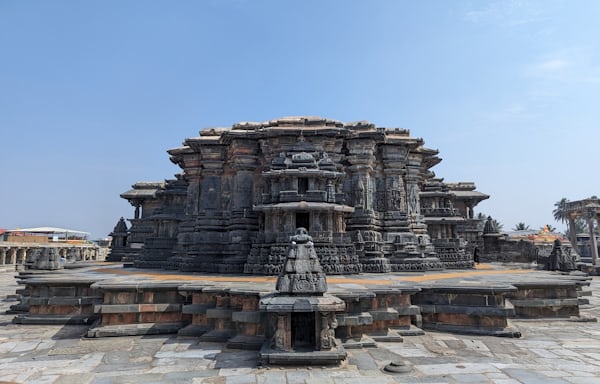
The Konark Sun Temple has long been surrounded by stories that blend history with imagination. Over time, many mysteries have been passed down through folklore, but not all of them are supported by evidence. Understanding the difference between facts and myths helps visitors appreciate the temple more clearly.
One popular belief is that a powerful magnet was placed at the top of the temple, causing the idol of the Sun God to float in mid air. Historians and archaeologists have found no scientific or material proof of such a magnet. This story is widely considered a legend rather than historical fact.
Another mystery relates to the collapse of the main sanctum. Some believe foreign invasions caused the destruction, while others blame natural disasters. Research suggests a combination of factors including coastal erosion, material fatigue, and gradual neglect after the decline of royal patronage.
The idea that the temple is haunted is also a myth. These stories likely emerged due to the temple’s ruined state and isolated surroundings at night. There is no documented evidence to support paranormal claims.
What remains factual is the temple’s engineering brilliance, precise alignment with the sun, and artistic depth. The real mystery of Konark lies not in myths, but in how such advanced knowledge existed over 700 years ago.
Related: Dwarka Underwater City: Facts, Discoveries & What Science Says
Why Konark Sun Temple Is Called the Black Pagoda
The Konark Sun Temple is often referred to as the Black Pagoda, a name that dates back several centuries and has strong historical reasons behind it. This title was given by European sailors, mainly Portuguese traders, who travelled along the eastern coast of India.
The temple was originally built using dark coloured stone, which appeared almost black from a distance, especially against the bright coastal sky. When the temple stood in its full height, it was visible from far out at sea and acted as a navigation landmark for ships sailing through the Bay of Bengal. Sailors used it as a reference point to identify the Odisha coastline, much like a lighthouse.
Another reason for the name comes from contrast. Nearby stood the Jagannath Temple in Puri, which was made of lighter stone and was known as the White Pagoda. To differentiate between the two major coastal temples, Konark naturally became known as the Black Pagoda.
Over time, storms, salt-laden winds, and coastal weather caused parts of the structure to weaken and collapse. However, the name remained and continues to be used in historical records and travel writings.
The term Black Pagoda does not reflect darkness or mystery, but rather the temple’s stone material, coastal importance, and historical role in maritime travel.
Related: Bangalore to Hosur Outstation Cabs Guide: Distance, Route, Time, Fare and Travel Tips
Best Time to Visit Konark Sun Temple and Entry Information
The Konark Sun Temple can be visited throughout the year, but the most comfortable time is October to March. During these months, the weather in coastal Odisha remains pleasant, with daytime temperatures suitable for walking around the temple complex and exploring the detailed carvings. Winters also offer clear skies, which are ideal for photography and guided tours.
April to June is summer in Konark and can be very hot and humid. Sightseeing during midday can be tiring, so if you visit in summer, early mornings are recommended. The monsoon season from July to September brings greenery and fewer crowds, but heavy rains can affect travel plans and outdoor exploration.
Entry Timings and Ticket Details
- Temple complex timings: 6:00 AM to 8:00 PM
- Museum timings: 9:00 AM to 5:00 PM (closed on Fridays)
- Entry fee:
- Indian visitors: Nominal fee
- Foreign visitors: Higher fee as per ASI guidelines
- Children below 15 years: Free entry
- Indian visitors: Nominal fee
Early morning visits are ideal to avoid crowds and experience the temple in calm surroundings. Hiring a local guide helps in understanding the stories behind the sculptures and architecture.
How to Reach Konark Sun Temple from Puri and Bhubaneswar
The Konark Sun Temple is well connected by road and can be easily reached from both Puri and Bhubaneswar, the two main travel hubs in Odisha. Most visitors plan Konark as part of the Puri Konark Bhubaneswar circuit.
From Puri to Konark
The distance from Puri to Konark is around 35 km, and the drive takes 1 to 1.5 hours via the scenic Marine Drive Road. This coastal route runs alongside the Bay of Bengal and is considered one of the most beautiful road stretches in Odisha. Taxis, private cabs, and buses are easily available from Puri.
From Bhubaneswar to Konark
Bhubaneswar is about 65 km from Konark, and the journey usually takes 1.5 to 2 hours by road. You can travel via NH316, which is a smooth and well maintained highway. Many travellers prefer booking a cab for flexibility, especially if they plan to cover nearby attractions on the same day.
By Air
The nearest airport is Biju Patnaik International Airport, Bhubaneswar. From the airport, hiring a taxi is the most convenient option to reach Konark directly.
By Rail
There is no railway station in Konark. The nearest stations are Puri and Bhubaneswar, from where road travel is required.
For a relaxed and time efficient journey, booking a private cab is the preferred choice for families, senior citizens, and group travellers.
Related: India Gate Travel Guide
Places to Visit Near Konark Sun Temple
A visit to the Konark Sun Temple can be easily combined with several nearby attractions that add cultural, spiritual, and natural depth to your trip. Most of these places are within a short driving distance and can be covered in half or one full day.
Chandrabhaga Beach is located just 3 km from the temple and is known for its clean shoreline and peaceful atmosphere. Early mornings are especially popular here, as devotees believe taking a dip during sunrise is auspicious. The beach is also a good spot to relax after temple exploration.
Ramachandi Temple sits along the Konark Puri Marine Drive and is dedicated to Goddess Ramachandi. Surrounded by river views and open landscapes, it is a quiet spiritual stop and a favourite break point for travellers driving from Puri.
The ASI Museum, Konark, located near the temple complex, houses original sculptures, fragments, and carvings recovered during excavations. Visiting the museum helps in understanding the temple’s original scale and artistic detail.
If time permits, a drive along the Puri Konark Marine Drive itself is an experience. The coastal road offers sea views, local food stalls, and photography spots.
These nearby places make Konark more than a single monument visit and turn it into a well rounded cultural journey.
Related: Bangalore to Kodaikanal Car Rental – Distance, Route & Travel Guide
Travel Tips for Visiting Konark Sun Temple
Visiting the Konark Sun Temple is a rewarding experience, but a little planning can help you make the most of your time here.
Try to reach the temple early in the morning, preferably soon after opening hours. The light is softer, the weather is pleasant, and the carvings are easier to observe without heavy crowds. Early visits also help photographers capture better details of the stone work.
Wear comfortable clothing and walking shoes, as you will spend a fair amount of time exploring the temple complex on foot. The stone pathways can get warm during the day, especially in summer. Carry a water bottle, sunscreen, and a cap if you are visiting between March and June.
Hiring an ASI approved local guide is highly recommended. A guide can explain the symbolism behind the sculptures, the sundial wheels, and the temple layout, which adds much more meaning to the visit.
Respect the monument by avoiding touching carvings or climbing on ruins. Photography is allowed in most areas, but drones are not permitted.
Conclusion
The Konark Sun Temple stands as a timeless reminder of India’s rich architectural knowledge, artistic excellence, and spiritual depth. Even in its ruined state, the temple continues to impress visitors with its detailed carvings, scientific precision, and powerful symbolism dedicated to the Sun God. From its chariot shaped design and sundial wheels to the stories woven into its stone walls, Konark offers more than a sightseeing experience. It offers insight into how advanced and thoughtful ancient Indian civilisation truly was.
Whether you are visiting for history, culture, photography, or quiet reflection, Konark leaves a lasting impression. Plan your journey at a relaxed pace, combine it with nearby destinations, and give yourself time to absorb the details. A well planned road trip makes the experience smoother and more enjoyable, especially when travelling with family or elders.
Related: Bangalore to Goa: The Ultimate Travel Guide
Konark Sun Temple FAQ’s
Konark Sun Temple is located in Konark town, Puri district, Odisha, about 35 km from Puri and 65 km from Bhubaneswar. It lies close to the Bay of Bengal and is part of the popular Golden Triangle of Odisha.
The temple was built in the 13th century by King Narasimhadeva I of the Eastern Ganga dynasty. It was constructed as a grand dedication to Lord Surya, the Sun God.
Konark Sun Temple is famous for its chariot shaped architecture, massive stone wheels that work as sundials, detailed carvings, and its advanced engineering. It is also recognised as a UNESCO World Heritage Site.
Visitors cannot enter the main sanctum as it has collapsed over time. However, you can freely explore the outer structures, halls, sculptures, and the museum within the complex.
The best time to visit is from October to March, when the weather is pleasant and suitable for sightseeing. Early mornings are ideal to avoid crowds and heat.
Leave a Reply